5-Minute Pom-Pom Transfer Activity for Fine Motor Practice
Some days, you want to do something meaningful with your child, but you don’t have time to plan an activity or gather a long list of supplies.
This simple pom-pom fine motor activity is made for those days.
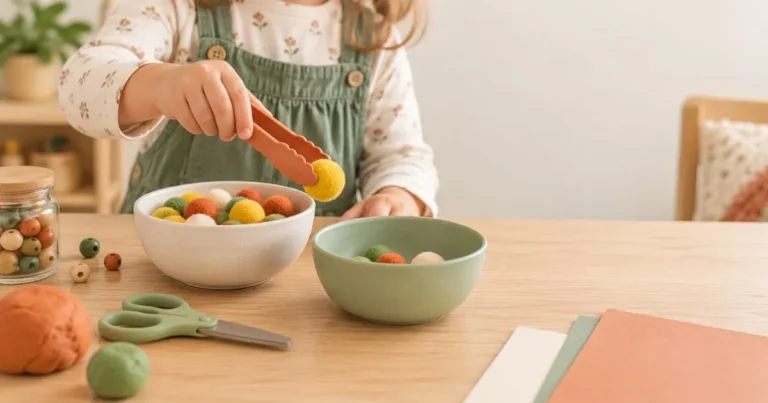
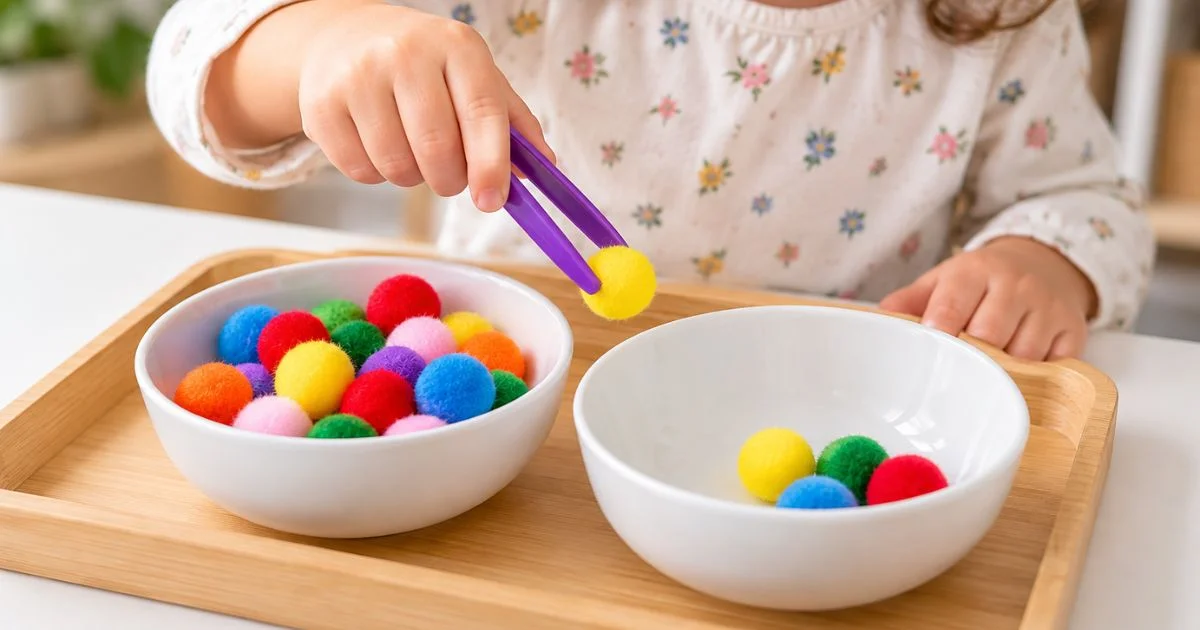
All you need are a few colorful pom-poms, two small bowls, and a pair of child-friendly tongs. Set them on the table and let your child pick up, move, and transfer the pom-poms from one bowl to the other.
It takes only a few minutes to set up, and there’s no “right” way to do it. It’s simply a small opportunity to play, explore, and practice using their hands.
Table of Contents
Quick Activity Overview
Time: About 5 minutes
Prep: Very low
You’ll need: Pom-poms, two small bowls or containers, and child-friendly tongs or tweezers
Focus: Grasping, squeezing, hand-eye coordination, and controlled hand movements
Best for: A quick fine motor activity at home for kindergarten-age children
What You’ll Need
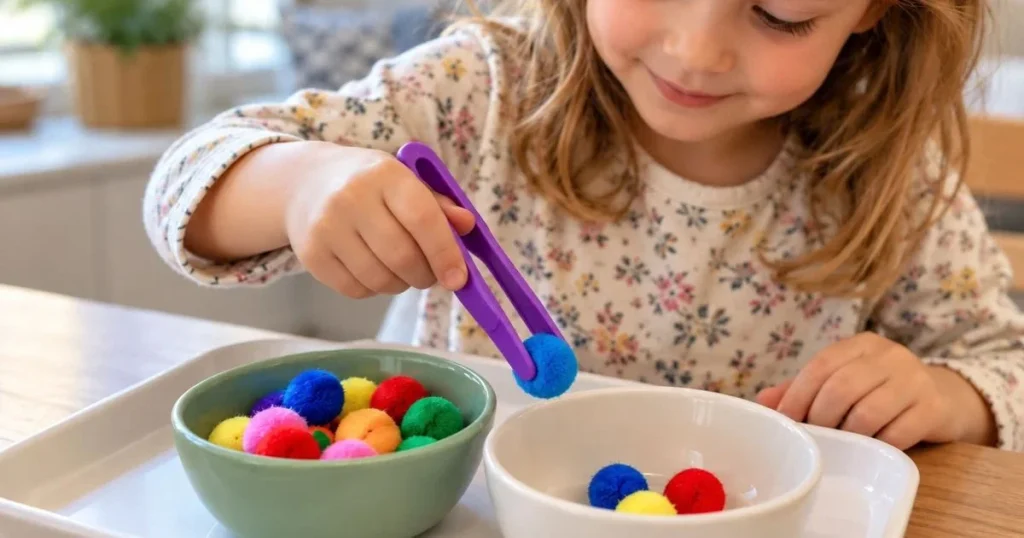
You don’t need anything complicated for this one:
- Colorful pom-poms
- Two small bowls or containers
- Child-friendly tongs or tweezers
- A tray, if you’d like to keep everything together
A quick safety note: Pom-poms and other small objects can be a choking hazard. Always supervise your child closely during the activity, and keep small materials away from younger children who may put them in their mouths.
How to Do This Pom-Pom Fine Motor Activity
Show your child how to pick up one pom-pom with the tongs and move it into the empty bowl. Then let them take over.
They might carefully move them one at a time. They might choose only their favorite colors. They might decide the tongs are too tricky and use their fingers instead.
That’s okay.
If the tongs feel frustrating, let your child use their fingers and try again another day. The activity doesn’t need to be completed in a particular way to be worthwhile.
Keep it playful and follow their lead.
What Are Those Little Hands Practicing?
This pom-pom fine motor activity gives children an opportunity to practice controlled movements with their hands and fingers.
Fine motor skills are used in many everyday activities, including drawing, writing, using utensils, handling small objects, and getting dressed.
The National Association for the Education of Young Children (NAEYC) encourages giving children plenty of opportunities to use their hands and fingers in everyday activities. It also highlights the value of using a variety of materials and tools to support fine motor development and early writing experiences.
That doesn’t mean every activity at home needs to become handwriting practice.
Moving a few colorful pom-poms can simply be a playful opportunity to use little hands, practice controlled movements, and explore at a child’s own pace.
Want to Make It Easier?
If the tongs are tricky, skip them.
Let your child transfer the pom-poms with their fingers instead. They can try the tongs again another day when they feel ready.
You can also use larger objects that are easier to pick up, as long as they are appropriate and safe for your child.
Ready for a Little More?
If your child enjoys the basic activity and wants to keep going, you can add a simple twist.
Try sorting the pom-poms by color, counting them as they move from one bowl to the other, or using a few containers to sort different colors.
You don’t need to do all of these.
Choose one—or none at all. A five-minute activity doesn’t need to become a thirty-minute lesson.
Busy Parent Tip
Keep the bowls, tongs, and activity materials together in a small box or container.
The next time you need something simple to do while you finish your coffee, prepare dinner, or fill a few quiet minutes, you won’t have to start from scratch.
Just bring out the box and begin.
Simple activities are much easier to use when they’re actually simple to prepare.
A Small Learning Moment Is Enough
Learning at home doesn’t have to look like school.
Sometimes it’s a pair of little hands, two bowls, a handful of colorful pom-poms, and a few quiet minutes together.
If your child plays for five minutes and then moves on, that’s okay. You don’t need to stretch the activity, finish every pom-pom, or turn it into a lesson.
Small moments can still be meaningful.