
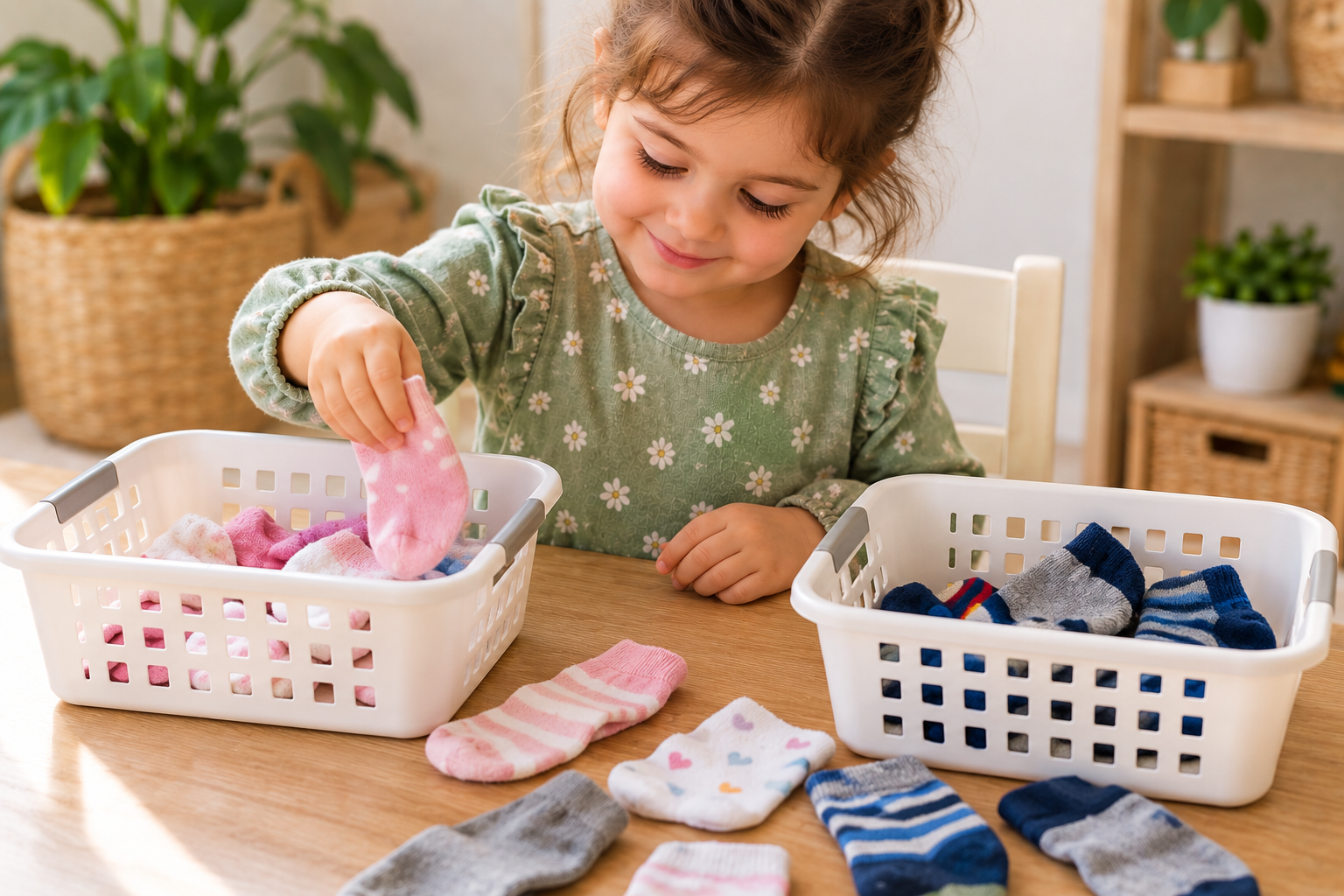
Easy Laundry Sorting Activity for Everyday Learning
Laundry day already comes with plenty to do, but it can also offer a simple learning moment for your child.
For this easy activity, you don’t need to prepare anything extra. Invite your child to help sort a small pile of clean laundry by color, type, or who it belongs to.
They might put socks together, separate shirts from pants, or make groups of similar colors.
It’s a simple way to involve your child in an everyday task while giving them an opportunity to notice, compare, and sort.
Quick Activity Overview
- Time: 5–10 minutes
- Prep: None
- You’ll need: A small pile of clean laundry
- Focus: Sorting, matching, and noticing similarities and differences
- Best for: Turning an everyday household task into a simple learning moment
What You’ll Need
You probably already have everything you need:
- A small pile of clean laundry
- A clear space on the floor, bed, or table
- A few baskets or piles, if you’d like to make sorting easier
That’s it. No worksheets, special supplies, or extra preparation needed.
Choose clothing that is easy and safe for your child to handle, and keep any laundry products or other household items out of reach.
Sort the Laundry Together
Place a small pile of clean laundry where your child can easily reach it.
Choose one simple way to sort. You might start with socks and shirts, light and dark colors, or clothes that belong to different family members.
Pick up one item and ask where it belongs. Then let your child continue sorting the rest.
There’s no need to finish the whole laundry basket. A small pile is enough for a quick activity.
Let Your Child Take the Lead
Once your child understands the idea, let them decide where each item belongs.
They might notice that two socks match, that several shirts are the same color, or that some clothes belong to different family members.
If something ends up in the “wrong” group, you can look at it together and talk about what makes it similar to or different from the other items.
Keep it relaxed. The goal isn’t perfectly sorted laundry—it’s giving your child a chance to observe, compare, and make choices.
What Is Your Child Practicing?
Sorting gives children opportunities to notice how objects are alike and different.
As your child groups clothes by color, type, or another simple feature, they practice comparing objects and deciding which ones belong together.
Matching pairs of socks can also encourage them to look closely at details such as color, pattern, and size.
You don’t need to explain these ideas as a lesson. Talking about what your child notices while you sort together is enough to make the activity part of everyday learning.
Want to Make It Easier?
Start with just a few pieces of clothing and choose one obvious way to sort them.
For example, you might separate socks from shirts or make two groups based on color.
If sorting feels tricky, do the first few items together and talk about what you notice.
Keep it simple and stop when your child is ready to move on.
Ready for a Little More?
If your child enjoys sorting the laundry, you can add a simple challenge.
Try sorting the same clothes in a different way. After sorting by type, for example, you might sort them again by color or match pairs of socks.
You can also ask simple questions such as, “What do these have in common?” or “How are these different?”
Choose one small variation and keep it playful. An everyday task doesn’t need to become a long lesson.
Busy Parent Tip
You don’t need to create a separate activity for this one.
The next time you’re sorting clean laundry, set aside a few easy pieces and invite your child to help.
Even a few socks or shirts are enough for a short sorting activity while you get something done at the same time.
Learning can fit into routines that are already part of your day.
A Small Everyday Learning Moment Is Enough
Learning at home doesn’t always need a planned activity.
Sometimes it happens while matching socks, sorting shirts, or helping with a simple household task.
If your child helps for a few minutes and then moves on, that’s okay. There’s no need to finish the whole basket or turn laundry time into a lesson.
Everyday routines can offer simple opportunities to notice, compare, and learn together.
Sources & Further Reading
NAEYC — Making Math Meaningful for Young Children
Head Start — Supporting Early Math Learning for Infants and Toddlers