12 Easy Tracing Activities for Kindergarten: Lines, Shapes & Letters
Tracing activities for kindergarten can be a simple way for children to practice moving a crayon, pencil, or marker along a planned path. Tracing does not need to mean pages and pages of dotted letters. A short activity can be a road to follow, a shape to outline, a picture to trace, or even a line drawn around a household object.
The goal is not perfect lines. The goal is to give your child a manageable chance to guide a writing tool with control, notice where a path starts and ends, and become more comfortable making purposeful marks. NAEYC recommends giving young children frequent access to varied writing materials and meaningful opportunities to draw and write, while the American Academy of Pediatrics includes tracing and copying geometric patterns among common hand-and-finger activities for preschool-age children.
Table of Contents
Quick Overview
- Time: 5–10 minutes is plenty for most home practice.
- Prep: Draw a path yourself, use a simple printable, or trace around an object.
- Tools: Crayons, washable markers, pencils, chalk, or dry-erase markers on a reusable surface.
- Start with: Wide, short paths and large shapes.
- Move toward: Narrower paths, simple pictures, selected letters, numbers, or the child’s name when appropriate.
- Keep it relaxed: A wobbly line is still useful practice. Stop before tracing becomes a battle.
- Activity type: Simple tracing activities for kindergarten using lines, shapes, paths, and everyday materials.
Start With the Easiest Tracing Level
If a tracing page looks easy to an adult but your child immediately rushes off the path, the activity may simply be too small or too complicated right now. Make the movement bigger before making it neater.
- Begin with a finger. Let your child slide a finger along the path before using a writing tool.
- Use a thick path. Two bold boundary lines with a wide “road” between them can be easier than a thin dotted line.
- Keep the path short. One or two simple routes can be enough for a first attempt.
- Choose large shapes. Big circles, squares, and triangles usually offer more room for controlled movement than tiny pictures.
- Let the child choose the tool. A chunky crayon or washable marker may feel easier than a thin pencil for some children.
12 Easy Tracing Activities for Kindergarten
These tracing activities for kindergarten include both printable and no-print options, so you can choose what works best for your child.. You can use only the ones that fit your child’s current comfort level.
1. Straight-Line Roads
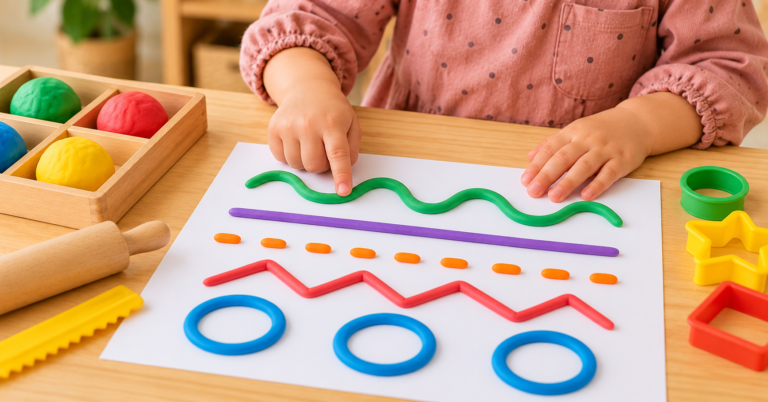
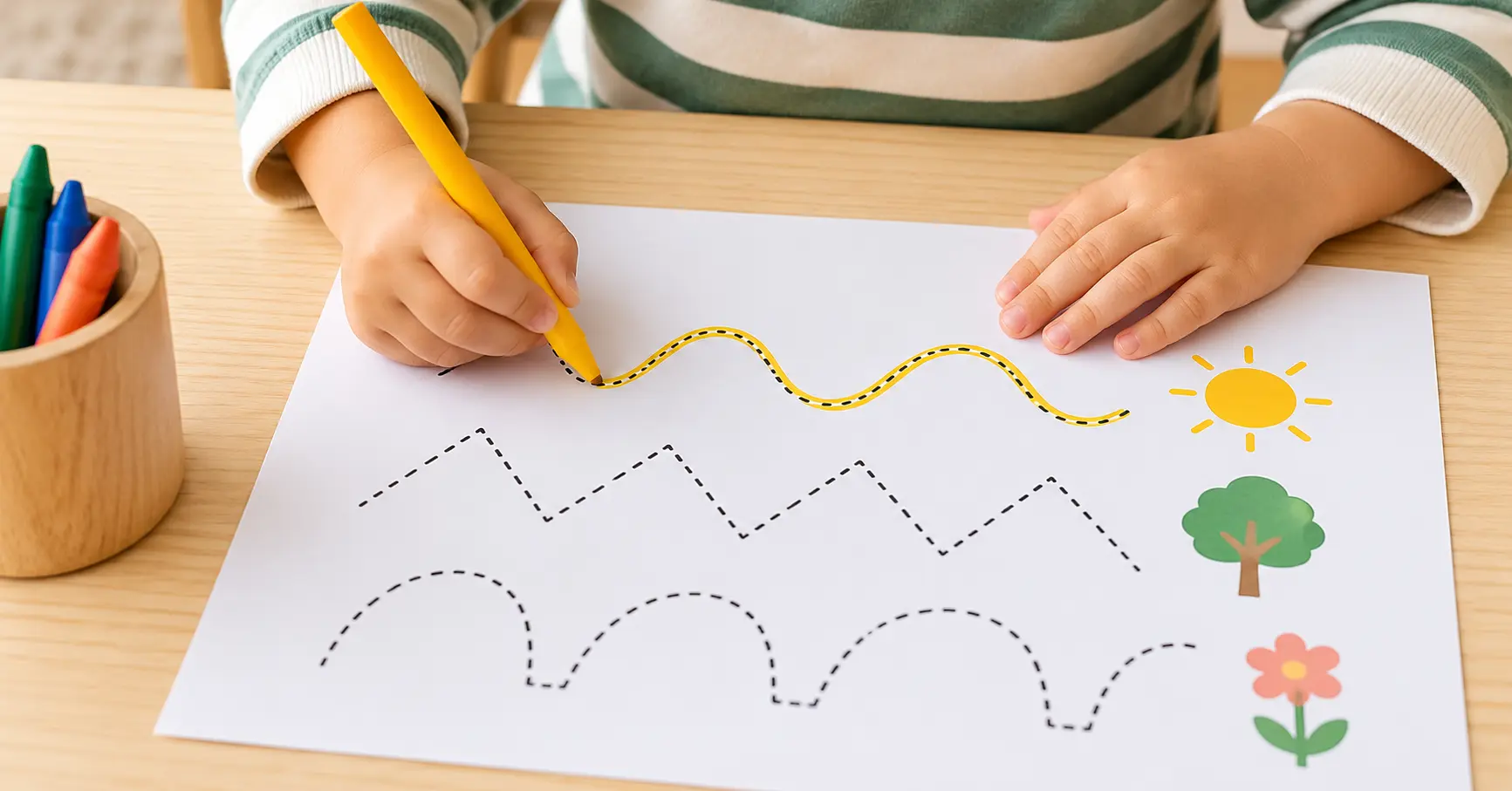
Draw two bold horizontal lines to make a wide road from one side of the paper to the other. Add a small car or animal at the start and a simple destination at the end. Invite your child to draw a line through the road without worrying about perfect centering. Make the road narrower only when the wide version feels easy.
2. Wavy and Curved Paths
Draw gentle waves, large curves, and simple loops. Curved paths ask the hand to change direction more often than a straight line, so keep the curves large at first. Try turning the page so the child traces in different directions.
3. Zigzag Trails
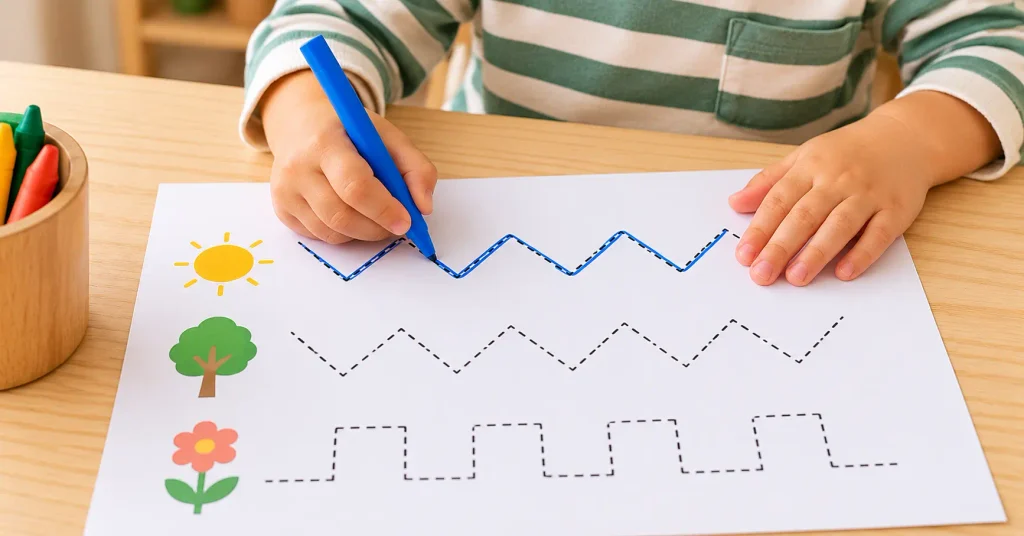
Make a mountain trail with large zigzags. Put a sticker, dot, or tiny picture at each turning point. The goal is to slow down enough to notice the corners, not to create a perfectly sharp zigzag.
4. Shape Tracing
Use large circles, squares, triangles, rectangles, and simple ovals. Your child can trace the outline once, color the shape, and then look for the same shape somewhere in the room. This keeps the page connected to a real object instead of making tracing feel isolated.
5. Trace Around Household Objects
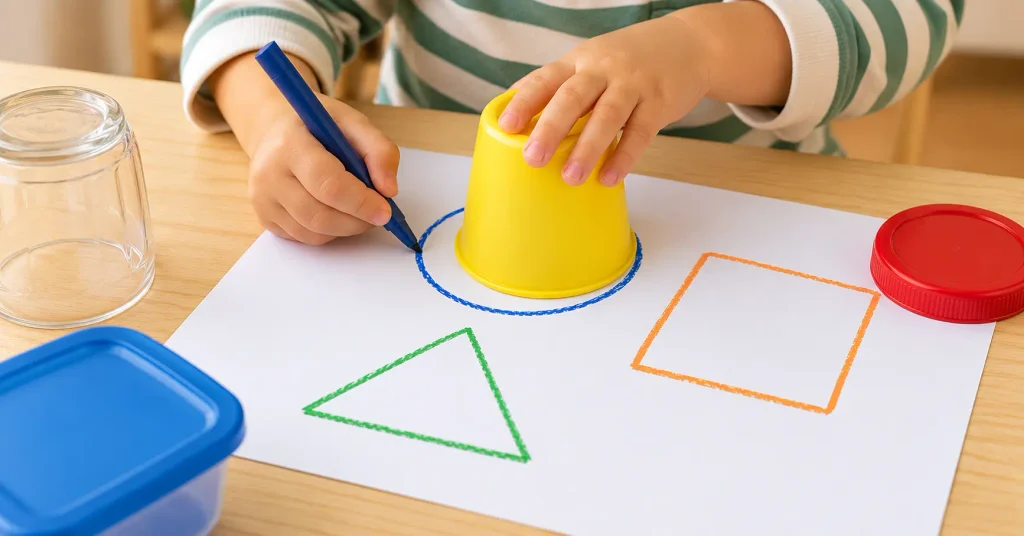
Place a cup, lid, block, cookie cutter, or small box on paper and hold it steady while your child traces around the edge. This is a no-print activity and gives the child a real boundary to follow. Choose objects that are easy to hold safely and do not have sharp edges.
6. Picture-Outline Tracing
Draw or print very simple pictures with large outlines: a balloon, leaf, cloud, fish, heart, or house. Invite your child to trace one part of the picture and then add color or their own details. Avoid tiny decorative lines that turn the task into precision work.
7. Trace-and-Color Paths
Create a path that leads to a picture. After tracing the route, let your child color the picture at the end. The coloring is not a reward that must be earned; it simply gives the activity a natural second step and a little more choice.
8. Finger Tracing on a Tray
Spread a thin layer of flour, cornmeal, or another safe household material on a shallow tray. Your child can trace large lines and shapes with one finger, smooth the surface, and try again. Supervise the activity and choose a material that is appropriate for your household, especially if allergies or mouthing are concerns.
9. Chalk Tracing on a Large Surface
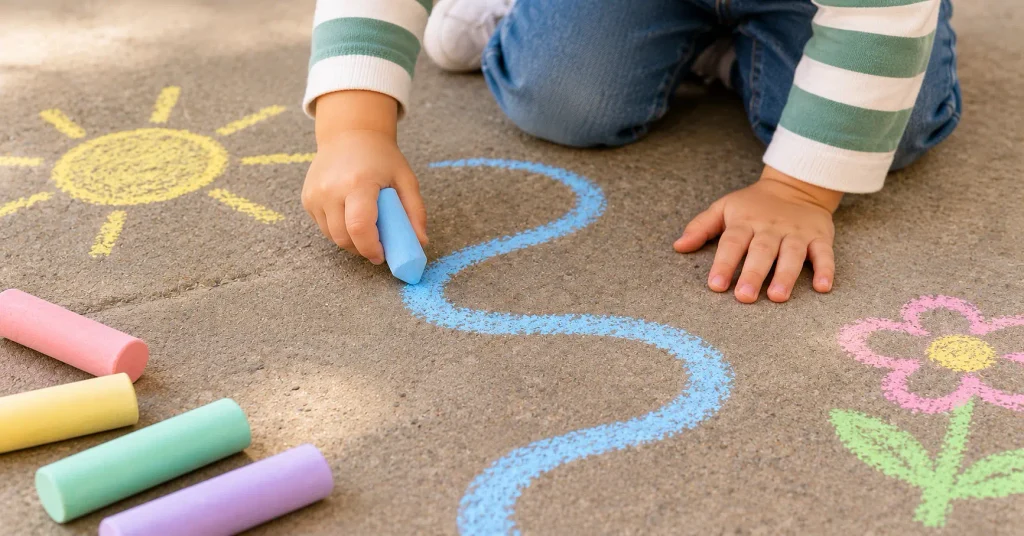
Draw large lines or shapes with sidewalk chalk outdoors, or use a chalkboard if you have one. Bigger movements can feel less demanding than small pencil work. Your child can trace directly over your line or follow beside it.
10. Letter-Like Stroke Tracing
Before turning the activity into full alphabet practice, trace the basic kinds of strokes that appear in many letters: straight down, across, diagonal, curve, and simple loop. Keep the strokes large and mix them into playful paths instead of presenting a long drill.
11. Selected Letter or Name Tracing
If your child is interested in letters, choose just one or two familiar ones—often a letter from their name. Write the letter large and clearly, then add one or two dotted versions beside it. Keep this brief. The separate Yanela Learning name-writing article can take over when your child is ready to copy or write the name more independently.
12. Number and Simple Symbol Tracing
For children who enjoy numbers, trace a few large numerals or simple symbols such as a plus sign, heart, star, or smiley face. Avoid combining too many academic goals on one page. A child can work on tracing without also being expected to count, read, and solve a problem at the same time.
Make Tracing Easier or Harder
A small change in the page can make the activity feel completely different. Adjust the path before assuming your child “needs more practice.”
| If it feels too hard | Try this | If it feels too easy |
| Child leaves the path immediately | Use a wider road or larger shape | Make the path slightly narrower |
| Hand tires quickly | Do only one or two paths | Add one more path or a longer route |
| Corners are frustrating | Use curves first | Add gentle zigzags or turns |
| Pencil feels difficult | Try crayon or washable marker | Try a thinner tool if comfortable |
What Tracing Should Not Replace
Tracing is only one kind of writing-tool practice. Children also need chances to draw their own pictures, make marks that mean something to them, attempt letters, write or copy their names, and use writing in real situations such as making a list or labeling a picture. NAEYC emphasizes varied writing materials and meaningful writing experiences rather than neatness alone.
- Free drawing and coloring
- Play with clay, blocks, puzzles, and other hand activities
- Independent mark-making and pretend writing
- Writing for a purpose, such as a note, label, list, or name
- Outdoor and whole-body play
Simple Setup for Home
- Choose one activity, not a stack of pages.
- Clear enough table space for the paper and the child’s helping hand.
- Use a writing tool that moves easily across the page.
- If the paper slides, use a clipboard, a small piece of removable tape, or a nonslip mat.
- Demonstrate one path, then let your child try. Avoid repeatedly correcting every wobble.
- End while the activity still feels manageable. You can always return another day.
Frequently Asked Questions
Are tracing activities for kindergarten helpful for pencil control?
They can be one useful option for guided pencil or marker practice, especially when the path is matched to the child’s current control. They should be balanced with drawing, play, independent writing attempts, and other hand activities rather than used as the only way to prepare for writing.
Should kindergarteners trace letters every day?
There is no need to make daily letter tracing a rule. Short, varied writing experiences are more consistent with the family guidance from NAEYC. If your child enjoys tracing a familiar letter, use it briefly and then offer drawing, name writing, or another meaningful writing activity.
What should a child trace first?
Start with wide straight or gently curved paths, then move to large shapes and mixed routes. Letters and numbers can come later or be introduced selectively when they are meaningful to the child.
What if my child cannot stay on the line?
Make the path wider, larger, or shorter. Let the child finger-trace it first. Staying perfectly on a thin dotted line is not the goal of early practice.
Are tracing worksheets necessary?
No. You can draw simple paths yourself, trace around household objects, use chalk, or finger-trace in a tray. Printables are convenient, but they are only one format.
Try This Next
After trying these tracing activities for kindergarten, you can continue with broader hand practice using 15 Fine Motor Activities for Kindergarten at Home. If your child is ready to move beyond tracing into purposeful early writing, try the Easy Name Writing Activity for Early Writing Practice.
Pick one tracing activity to try with your child today. Keep it short, follow their lead, and save this list for the next time you need a simple, screen-free learning idea.
Sources & Further Reading
NAEYC — What Do Children Learn in a High-Quality Kindergarten?
NAEYC — Activities to Support Your Child’s Writing Development
HealthyChildren.org — Hand and Finger Skills of Your Preschooler